



Best Dog Food for Sensitive Stomachs in the UK (2026)

At a glance
- Fresh dog food with whole, recognisable ingredients and minimal processing is the most digestible format for most sensitive dogs - significantly easier on the gut than dry kibble or heavily processed wet food
- The food format matters less than what is actually in it - the most common triggers for digestive sensitivity are beef, dairy, wheat, soy, and artificial preservatives
- Novel proteins are the strongest starting point for sensitive dogs - lamb and salmon are both less likely to cause a reaction in dogs that have eaten chicken or beef for most of their lives
- Processing temperature makes a bigger difference than most owners expect - high-temperature extrusion degrades proteins and fibre in ways that directly increase digestive load, regardless of the ingredient list
- Most dogs show noticeable improvement within two to four weeks of switching to a more digestible diet; if there is no change after four weeks on a consistent food, see a vet
What should I actually look for in dog food for a sensitive stomach?
Fresh dog food built around a novel protein, with a short ingredient list and minimal processing, gives sensitive dogs the best chance of consistent improvement. Choosing by format alone - or by marketing claims like "sensitive" or "gentle" on the packaging - is far less reliable than reading what is actually in the food and understanding how it was made.
Three things matter most. First, the ingredient list: every item should be something you can picture in its natural form. If the label reads like a chemistry experiment, the additives and preservatives it contains are among the most common triggers for digestive sensitivity. Second, the protein source: dogs that have eaten the same protein for years are more likely to have developed a sensitivity to it, which means a genuinely novel protein - one they have not eaten regularly before - removes that variable immediately. Third, processing method: food cooked at lower temperatures retains more of its natural nutritional structure, which directly reduces the work the digestive system has to do to extract nutrition from it.
A food that does well on all three is meaningfully more likely to produce improvement than one selected on price, convenience, or brand recognition alone.
How do different types of dog food compare for sensitive stomachs?
Fresh dog food is the most digestible format for most dogs with sensitive stomachs, combining high moisture content, whole ingredients, and low processing load. Here is how the main formats compare.
| Format | Digestibility | Moisture content | Processing level | Verdict for sensitive stomachs |
|---|---|---|---|---|
| Fresh (gently cooked) | High | 65-75% | Minimal - slow low-temperature cooking | Best option for most sensitive dogs |
| Raw | High | 65-75% | None | Works well for some - bacterial load a consideration |
| Cold pressed | Medium-high | Around 12% | Low - below extrusion temperatures | Good middle ground if fresh is not practical |
| Wet / canned | Medium | 75-85% | Moderate | Better than kibble - quality varies widely |
| Dry kibble | Low-medium | Around 10% | High - high-temperature extrusion | Hardest to digest - worst option for most sensitive dogs |
What type of dog food is best for a sensitive stomach?
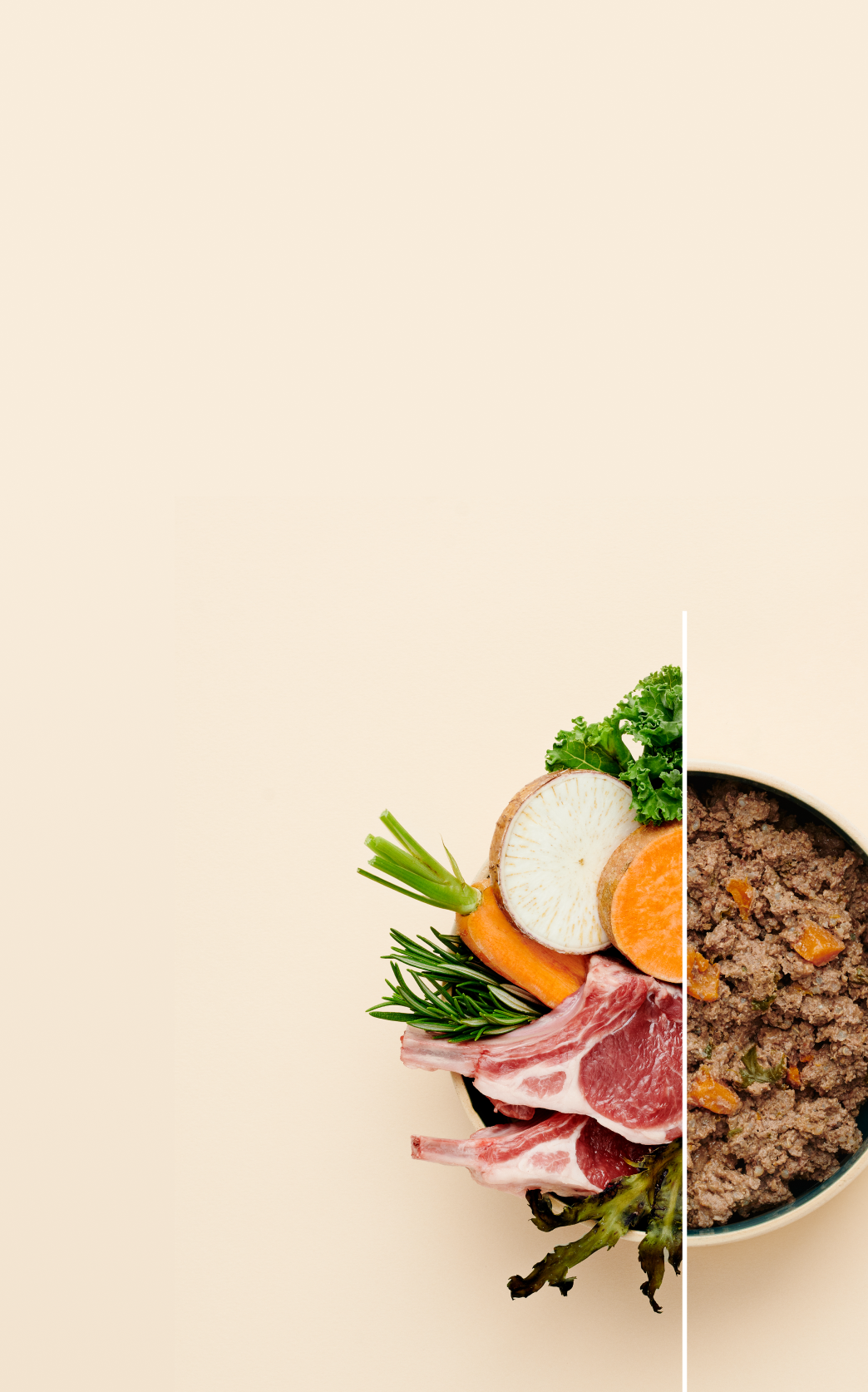
Gently cooked fresh dog food is the best type for most dogs with sensitive stomachs, because it combines the two things that matter most: whole, recognisable ingredients and a low-temperature cooking process that preserves their natural nutritional structure. The result is food the gut can extract nutrition from with less effort - which is exactly what a sensitive digestive system needs.
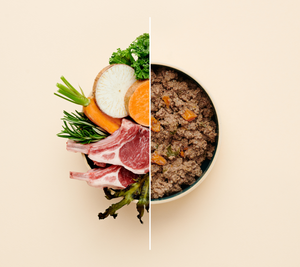
Gently cooked fresh food. The cooking process is what distinguishes this from other formats. Ingredients cooked at lower temperatures retain more of their original protein structure and fibre behaviour, which reduces digestive load. Meals built around a single novel protein - like Marleybones Lush Lamb or Sassy Salmon - are particularly well suited to sensitive dogs, because the ingredient list is short, the protein is less likely to have triggered a prior sensitivity, and chicory root provides a natural prebiotic to support gut bacteria. For dogs whose symptoms have not improved after switching kibble brands, a move to gently cooked fresh food often produces results where everything else has not - because the processing load itself was a significant part of the problem.

Freshly prepared fish, veggies & superfoods
Raw food. Raw feeding removes processing entirely, which is good for digestibility. The protein and fat stay in their natural form, and many sensitive dogs respond well to it. The practical considerations are real: raw food requires careful sourcing, correct storage, and consistent hygiene to manage bacterial contamination risk for both dogs and the people handling it. Nutritional completeness also varies more across raw products than it does with commercially prepared complete meals. For households comfortable with the preparation requirements, raw is a genuinely effective option. For those who want the digestibility advantage without the handling complexity, gently cooked fresh food achieves comparable results.
Cold pressed kibble. Cold pressed kibble is produced at lower temperatures than conventional extruded dry food, which means it retains more of the natural structure of its ingredients. It is more digestible than standard kibble, and significantly more convenient than fresh or raw. It is not as digestible as fresh food - moisture content is around 12% compared to 65-75% in fresh food, and lower moisture makes digestion harder for sensitive dogs - but it is a meaningful step up for owners who need a dry food format. Using cold pressed kibble as part of a mixed feeding approach alongside fresh food is a workable option for budget or convenience reasons.
Wet and canned food. Conventional wet food is higher in moisture than dry kibble, which makes it easier for many sensitive dogs to digest. The quality range within this format is very wide. The best wet foods use a named protein source as the primary ingredient with minimal additives; many others rely heavily on meat derivatives, thickeners, and flavour enhancers that can aggravate a sensitive gut. If wet food is the chosen format, the ingredient list is the most reliable guide to quality - a short list with identifiable ingredients is a meaningful positive signal.
Standard dry kibble. Conventional extruded kibble is the hardest format on a sensitive stomach. High-temperature extrusion degrades proteins and fibre, reduces moisture to around 10%, and increases the digestive effort required to extract nutrition from every meal. Many sensitive dogs manage on kibble because it is the only food they have been given, but it is the format least likely to produce improvement in a dog with ongoing digestive issues. If kibble is preferred for practical reasons, choosing a higher-quality formula with a named protein source as the first ingredient and no artificial preservatives will reduce the impact - but the format itself remains a limiting factor.
Which ingredients are most likely to cause problems for sensitive dogs?
Beef, dairy, wheat, soy, and artificial preservatives are the ingredients most commonly linked to digestive sensitivity in dogs. Understanding which category is most likely responsible is the fastest route to finding a food that works.
Proteins. Beef and dairy are the most common culprits, followed by chicken in dogs that have eaten it heavily for years. This is not because these proteins are inherently harmful - it is because they are the most widely used in commercial dog food, giving sensitivities more opportunity to develop over time. Switching to a novel protein like lamb or salmon removes this variable without requiring any other dietary change.
Grains. Wheat and soy are the most problematic, particularly when used as primary bulking ingredients in dry food. Grains are not inherently harmful - a dog reacting to wheat used as a cheap filler may tolerate whole oats or brown rice in a balanced fresh food recipe without any issue. The quantity and quality of grain matters far more than its presence or absence.
Artificial additives. Preservatives like BHA and BHT, along with artificial colours and flavour enhancers, are poorly tolerated by dogs with reactive digestive systems. These are most common in lower-cost dry and wet foods, and absent from fresh food by design.
Fat source and quantity. High-fat diets can trigger acute digestive episodes in dogs prone to fat intolerance. Fat itself is essential; the source and quantity are what matter. Named animal fat from an identifiable source is better tolerated than rendered fat of unspecified origin.

“Such a relief to see her enjoying her food”
Does processing method really make that much difference?
Yes - and for sensitive dogs in particular, it often makes more difference than the ingredient list alone suggests. High-temperature extrusion changes the physical structure of proteins and fibre in ways that directly increase how hard the digestive system has to work.
Proteins processed at high temperatures are harder to break down in the gut and can irritate the gut lining over time. Fibre that has been degraded through high-heat processing no longer supports healthy gut bacteria the way intact fibre does. This is why dogs with chronic digestive issues frequently improve on fresh food even before a specific trigger ingredient has been identified - reducing the processing load alone was enough to make a difference.
Marleybones uses a slow in-pack cooking process at around 89°C - lower than the temperatures used in conventional manufacturing - which keeps ingredients closer to their natural state while still making the food safe and shelf-stable. For sensitive dogs, that combination consistently produces better digestive outcomes than higher-processed alternatives with comparable ingredient lists.
How do I switch my dog to a new food for sensitive stomachs?
Transition gradually over seven to ten days, mixing increasing proportions of new food with the current food. Even the most suitable food can cause temporary digestive upset if introduced too quickly, because the gut microbiome needs time to adapt.
A simple schedule: 25% new food for the first two days, 50% for days three and four, 75% for days five and six, 100% from day seven onwards. For dogs with particularly reactive digestion, extend each stage by a day or two rather than pushing through.
Keep a simple food diary during the transition - what was eaten, portion size, and any symptoms. If there is no meaningful improvement after four weeks on a consistent new food, that diary is genuinely useful context when you talk to a vet. Persistent or severe symptoms, blood in stools, significant weight loss, or repeated vomiting are reasons to see a vet before making any dietary changes at all - some digestive conditions need clinical treatment, not just a food switch.

Treats with fresh British lamb as the #1 ingredient
FAQs
Is grain-free dog food better for sensitive stomachs?
Not automatically. Grains are not inherently the problem - it is usually the quantity and quality of grain used as a cheap filler in heavily processed food. A dog reacting to wheat in low-quality kibble may tolerate whole oats or brown rice in a fresh, minimally processed recipe perfectly well. Grain-free food that replaces grain with large quantities of legumes like peas or lentils introduces its own nutritional considerations and is not automatically easier to digest.
Should I try a novel protein for my sensitive dog?
Yes, if your dog has been eating the same protein for most of its life. Dogs that have eaten chicken or beef for years are statistically more likely to have developed a sensitivity to those proteins - not because they are harmful, but because the immune system has had more opportunity to react. Lamb and salmon are both strong starting points. Marleybones Lush Lamb and Sassy Salmon are built around this principle, with short ingredient lists that make it straightforward to identify whether the protein change is what's making the difference.
How long does it take to see improvement after switching dog food?
Most dogs show noticeable improvement within two to four weeks of moving to a more digestible diet. Stool quality is usually the first thing to improve, followed by coat condition and energy levels. If there is no meaningful change after four weeks on a consistent food, the cause may not be dietary - a vet assessment is the right next step.
Is wet food better than dry food for sensitive stomachs?
Generally yes. Wet food is higher in moisture and less heavily processed than dry kibble, which makes it easier for most sensitive dogs to digest. That said, quality varies more within the wet food category than the format comparison alone suggests. A high-quality wet food with a named protein source and no artificial additives will significantly outperform a poor-quality one. Fresh food, where the full ingredient list is visible and processing is minimal, tends to produce the most consistent results for dogs with ongoing digestive sensitivity.
Can I mix fresh food with my dog's existing kibble?
Yes, and for dogs with sensitive stomachs it can be a useful transitional approach. Starting with a smaller proportion of fresh food alongside existing kibble reduces the digestive adjustment required. Some owners continue mixing long-term as a way to improve nutritional quality without a complete format switch. If digestive symptoms persist on a mixed diet, moving to fresh food exclusively for a consistent four-week trial gives a cleaner picture of whether the food change is working.
How do I know if my dog has a sensitive stomach or something more serious?
Occasional loose stools or mild wind that clears up within 24 to 48 hours is usually diet-related and not a cause for concern. Persistent symptoms lasting more than two weeks, blood in stools, significant weight loss, or repeated vomiting are reasons to see a vet before making any dietary changes. Conditions like inflammatory bowel disease, pancreatitis, or parasites need clinical diagnosis and treatment - a food switch will not resolve them.
What is the quickest way to work out which ingredient is causing the problem?
An elimination diet is the most reliable method - switching to a single novel protein your dog has not eaten before, with no other dietary changes, and holding that for four weeks. If symptoms improve, reintroducing one ingredient at a time identifies the trigger. If symptoms do not improve after four consistent weeks, the cause is likely processing load rather than a specific ingredient - which is when a move to gently cooked fresh food tends to produce results where ingredient switching alone has not.
 Give your dog the quality nutrition they deserve
Real meat, wholesome veggies and functional superfoods.
Get 40% OFF today