

Why is fat important in a dog's diet?

At a glance
- Fat is the most energy-dense macronutrient — it delivers 9 kcal per gram, compared to 4 kcal per gram from protein or carbohydrates
- Omega-3 and omega-6 are essential fatty acids dogs cannot produce themselves and must get from food
- Fat enables the absorption of vitamins A, D, E, and K — without it, those vitamins pass through unused
- Skin condition, coat quality, brain function, and reproductive health all depend on adequate dietary fat
- Too little fat causes deficiency; too much causes weight gain — the right amount depends on the dog's age, size, and activity level
Why does a dog actually need fat in their food?
Fat is an essential macronutrient for dogs, not a filler to be minimised. It is the body's preferred source of concentrated energy, delivering 9 kilocalories per gram. That is more than double what protein or carbohydrates provide. Beyond energy, fat performs functions that simply cannot be replicated by other nutrients.
The most critical are the essential fatty acids: omega-3 and omega-6. Dogs cannot synthesise these in meaningful quantities. They must come from food. Omega-6 fatty acids support skin integrity and the inflammatory response. Omega-3 fatty acids, particularly EPA and DHA, support brain development, eye health, and the reduction of chronic inflammation. A diet short on either creates real, measurable problems over time.
Fat also acts as the transport system for fat-soluble vitamins. Vitamins A, D, E, and K dissolve in fat, not water. Feed a dog a fat-deficient diet and those vitamins are not absorbed properly, regardless of how much is in the food. Understanding how key nutrients interact in dog food is the foundation of feeding well.
Finally, fat makes food palatably appealing. Dogs are more likely to eat food with adequate fat content. For fussy eaters especially, fat is part of the reason fresh food gets eaten.
What are the signs that a dog is not getting enough fat?
Fat deficiency produces visible and physical signs. The most common is a dull, dry, or flaky coat. The skin beneath may become itchy, scaly, or prone to infection. These symptoms appear because the skin barrier depends on fatty acids to maintain its structure and moisture.
Beyond the coat, low dietary fat causes:
- Low energy and poor endurance during exercise
- Slow wound healing
- Increased susceptibility to infection, as immune signalling relies on fatty acids
- Poor reproductive performance in breeding dogs
- Neurological issues in puppies, particularly where DHA is insufficient during development
If a dog is showing persistent skin problems, fatigue, or coat deterioration, it is worth reviewing the fat content and fat quality in their food. Persistent or worsening symptoms warrant a vet check — there are conditions beyond diet that produce similar signs.
Which fats are actually good for dogs — and which should you avoid?
Not all fats are equal. The source and type of fat matter as much as the quantity.
| Fat type | Found in | Key function |
|---|---|---|
| Omega-3 (ALA) | Linseeds, chia seeds, hemp seeds | Anti-inflammatory, supports skin and coat |
| Omega-3 (EPA & DHA) | Oily fish (salmon, sardines, mackerel) | Brain development, eye health, joint support |
| Omega-6 (LA) | Chicken fat, sunflower oil, meat | Skin barrier function, immune signalling |
| Saturated fat | Animal fat, beef fat, lamb fat | Energy dense; fine in moderation |
| Trans fats | Heavily processed foods | No beneficial role — best avoided entirely |
The omega-3 to omega-6 ratio matters too. Most commercial dog foods skew heavily toward omega-6 because it is cheaper and more abundant. A diet high in omega-6 without adequate omega-3 to balance it creates a pro-inflammatory state. Oily fish is the most bioavailable source of EPA and DHA. Plant-based omega-3 sources like linseeds and chia seeds provide ALA, which dogs convert to EPA and DHA at low efficiency. Fish remains the better source for active anti-inflammatory benefit.
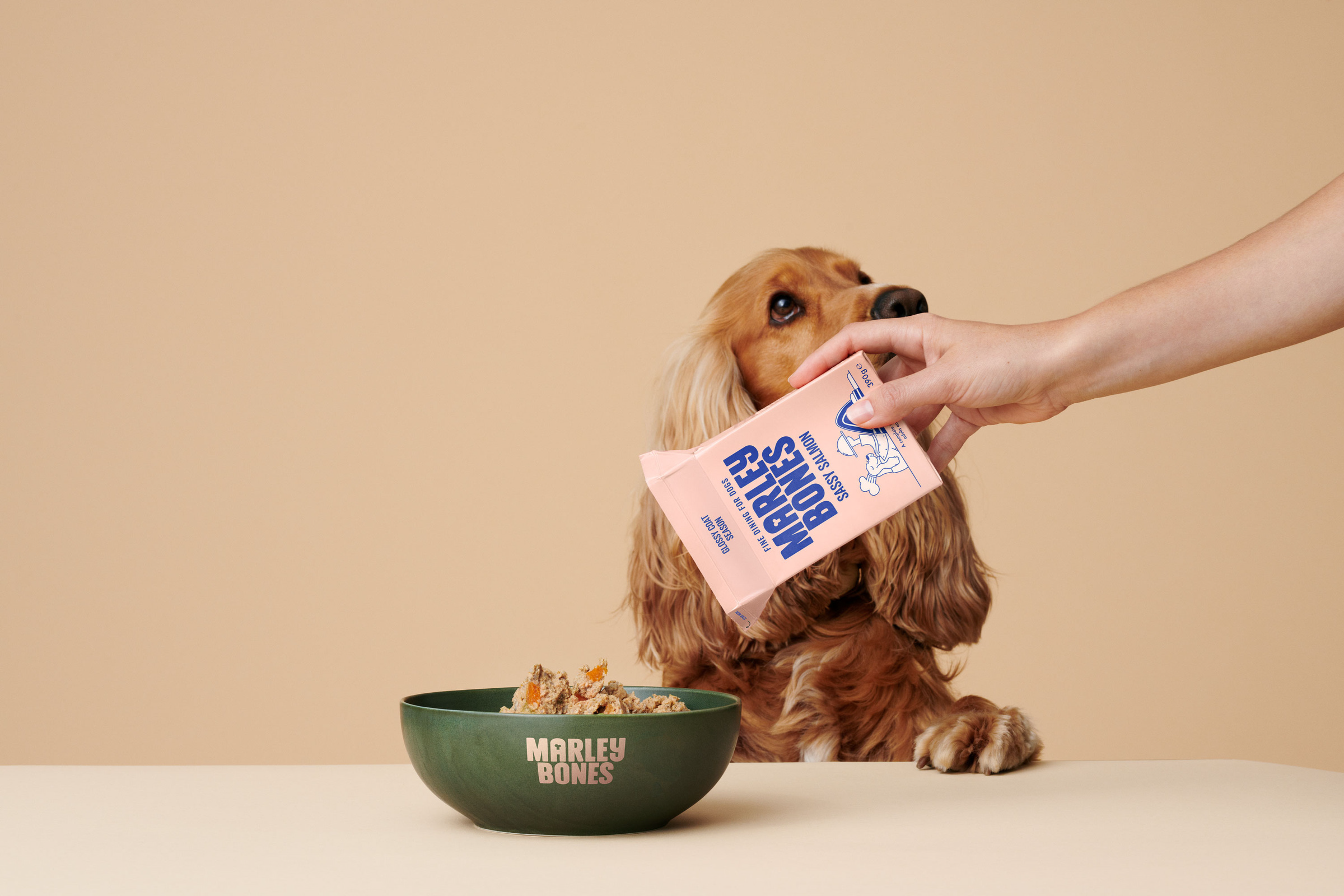
Marleybones' Sassy Salmon uses salmon as its primary protein, delivering a naturally high EPA and DHA content alongside chia seeds and linseeds — two plant-based omega-3 sources that support the overall fatty acid profile.
How much fat should a dog's diet contain?
FEDIAF guidelines set the minimum fat requirement for adult dogs at 5.5% on a dry matter basis. In practice, most complete and balanced dog foods sit between 10% and 20% fat on a dry matter basis, depending on the life stage and energy needs of the dog.
Puppies need more fat than adult dogs. Their brains are still developing, and DHA in particular is critical during the first months of life. Working dogs and highly active breeds also need higher fat intakes to sustain their energy output. Senior or less active dogs may need slightly less, to avoid weight gain.
Fresh food tends to present fat figures as a percentage of the food as fed, which looks lower than dry matter percentages on kibble labels. The two are not directly comparable. To compare fat levels across different food formats, convert both to dry matter basis first.
Every dog is different — build your personalised Marleybones feeding and health plan tailored to your dog's age, size, and health requirements.
Marleybones recipes are vet-developed and FEDIAF compliant, meaning the fat levels in each meal are calculated to meet the nutritional requirements for all life stages, including puppies. The ingredients used — real meat, oily fish, and seeds like hemp and chia — provide fat from whole food sources rather than isolated oils added after processing.
If you are reading labels and want to understand what fat figures actually mean alongside other nutrients, how to read a dog food label explains what to look for and how brands present the numbers.

“Such a relief to see her enjoying her food”
FAQs
Is fat bad for dogs?
Fat is not bad for dogs. It is an essential nutrient. The issue is quantity and source. Too much fat, particularly in inactive dogs, contributes to weight gain. Too little causes deficiency. The right amount, from quality sources, is exactly what a dog's body needs to function properly.
Can too much fat cause pancreatitis in dogs?
A single very high-fat meal can trigger pancreatitis in some dogs, particularly those already predisposed to the condition. Dogs with a history of pancreatitis need controlled fat intake. For most healthy dogs, fat within the normal range of a complete, balanced diet does not cause pancreatitis. If your dog has had a pancreatitis episode, speak to your vet before making dietary changes.
Do dogs need omega-3 supplements?
If a dog is eating a complete diet that already includes oily fish or adequate omega-3 sources, additional supplementation is usually unnecessary. Dogs eating primarily chicken- or beef-based diets with no fish component benefit most from an omega-3 supplement, particularly for coat, skin, and joint health.
What is the difference between omega-3 and omega-6 for dogs?
Omega-6 supports skin barrier function and the immune response. Omega-3, especially EPA and DHA from fish, reduces inflammation and supports brain and eye health. Both are essential. The key is balance. Most modern dog diets are omega-6 dominant. Increasing omega-3 — through oily fish or a quality supplement — brings the ratio closer to what research supports for long-term health.
Does fat content differ between puppy and adult dog food?
Yes. Puppies require higher fat levels than adult dogs, primarily because DHA is critical for brain and eye development in early life. FEDIAF sets a minimum DHA level specifically for growth formulas. Adult maintenance diets have lower minimum fat requirements. A food labelled complete for all life stages must meet the higher puppy thresholds across the board.
“A complete game changer!!”


 Give your dog the quality nutrition they deserve
Real meat, wholesome veggies and functional superfoods.
Get 40% OFF today