
Puppy Feeding Schedule: How Often and How Much by Age

At a glance
- Puppies under 12 weeks need four meals a day — their stomachs are small and blood sugar drops quickly between feeds
- From 12 weeks to six months, three meals a day is the standard
- From six months onwards, two meals a day suits most breeds
- Portion sizes must match your puppy's current weight and expected adult size — not just age
- Always use the feeding guide on your specific food, then adjust based on body condition
How often should I feed my puppy?
Puppies need feeding more often than adult dogs because their stomachs are small and they burn energy fast. Four meals a day is the right starting point for young pups. As they grow, meal frequency reduces. Here is how it works by age:
- Under 8 weeks — puppies should still be with their mother. Weaning typically begins at 3 to 4 weeks, but solid food intake is minimal at this stage
- 8 to 12 weeks — four meals a day, evenly spaced. Think roughly 7am, 12pm, 5pm, and 9pm
- 12 weeks to 6 months — drop to three meals a day. Morning, midday, and evening works well
- 6 to 12 months — move to two meals a day. Most puppies handle this transition without issue
- 12 months plus — two meals a day remains the right routine for most breeds, though giant breeds are sometimes kept on a growth-appropriate plan until 18 to 24 months
Consistency matters as much as frequency. Feed at the same times each day. It helps with digestion, makes toilet training far easier, and reduces anxious or demanding behaviour around mealtimes.
How much should I feed my puppy at each age?
There is no single number that applies to every puppy. A 10-week-old Chihuahua and a 10-week-old Great Dane need very different amounts. Portion size depends on three things: your puppy's current weight, their expected adult weight, and the caloric density of the food you're using.
That said, here are rough daily totals as a starting framework. These are based on average figures and should always be checked against your specific food's feeding guide for accuracy:
- Toy breeds (adult weight under 5kg) — roughly 150 to 250g of fresh food daily, divided across meals
- Small breeds (5 to 10kg adult weight) — roughly 250 to 400g daily
- Medium breeds (10 to 25kg adult weight) — roughly 400 to 700g daily
- Large breeds (25 to 45kg adult weight) — roughly 700g to 1kg daily
- Giant breeds (over 45kg adult weight) — 1kg or more daily, but controlled carefully to avoid too-rapid growth
These figures apply to complete fresh food. Dry kibble is more calorie-dense, so daily volumes will be significantly lower. Always start from your food's specific guide rather than generic figures.
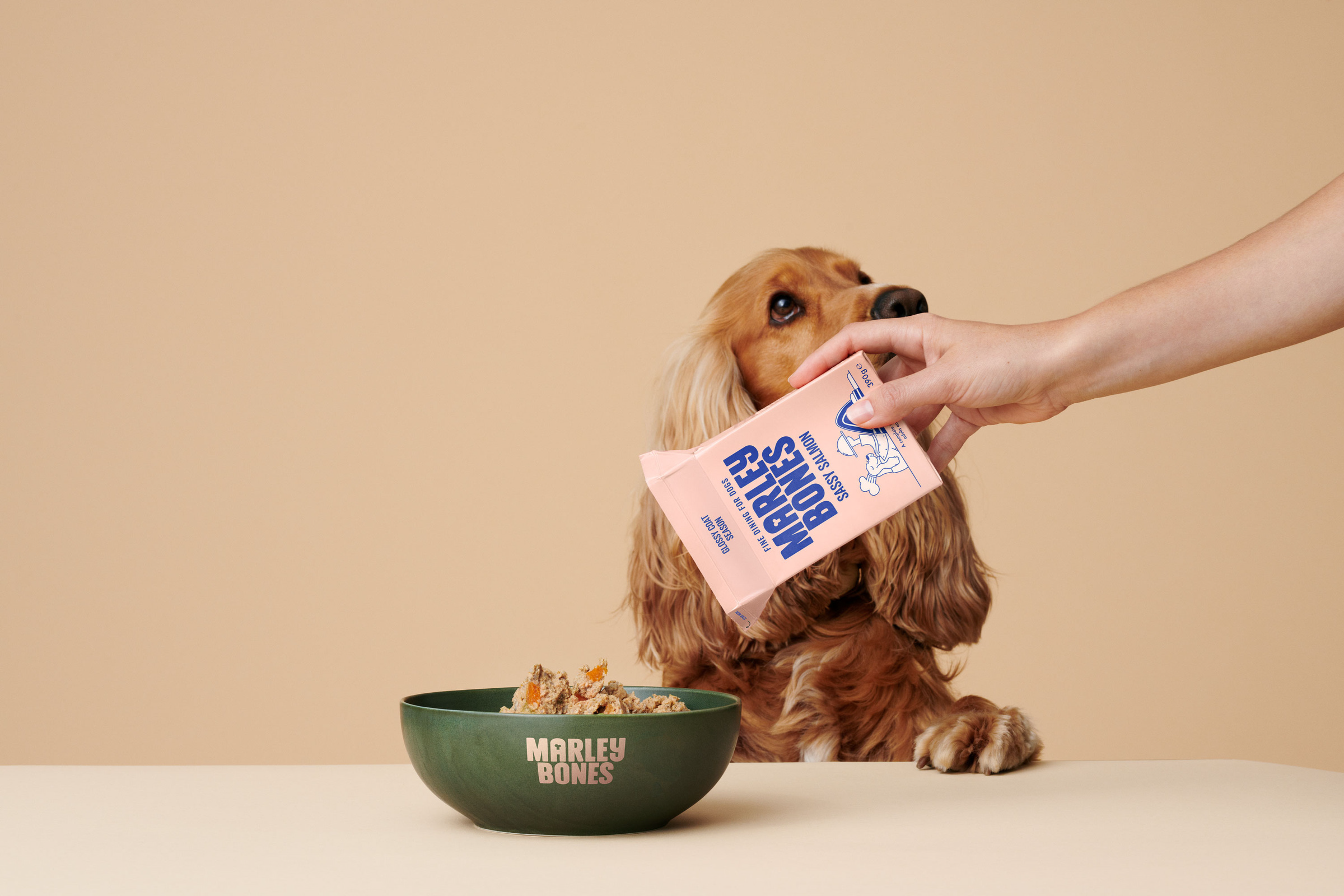
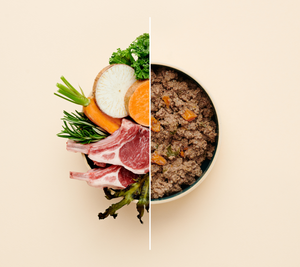
Marleybones meals are complete for all life stages including puppies, with clear feeding guidelines per pack. The vet-developed recipes are FEDIAF compliant, which means they meet the European nutritional standard for complete dog food — so you are not guessing at whether the nutrition is right.
How do I know if I'm feeding the right amount?
Feeding guides are a starting point. Your puppy's body tells you whether you have it right.
Run your hands along your puppy's ribcage. You should feel the ribs without pressing hard, but not see them clearly from across the room. A puppy with ribs visibly protruding is underweight. A puppy where you cannot feel the ribs at all without firm pressure is carrying too much.
Puppies should look lean and athletic — not barrel-shaped, and not gaunt. Weight checks every two weeks help you spot drift early and adjust portions before it becomes a problem.
Large and giant breeds need particular care here. Growing too fast puts strain on developing joints and bones. Controlled growth is more important than a big, chunky-looking puppy. If you are ever unsure whether your large-breed puppy's growth rate is healthy, speak to your vet.
Should I change food as my puppy grows?
If you're feeding a food labelled as complete for all life stages, there is no nutritional need to switch formats as your puppy ages. You adjust the portion and feeding frequency — the food itself stays the same.
If you're moving between food types — switching from dry kibble to fresh food, for example — do it gradually over 7 to 10 days. A gradual transition reduces the chance of digestive upset and gives your puppy's gut microbiome time to adjust. Start with 25% new food, 75% old, and shift the ratio every couple of days.
If your puppy goes off their food during a transition or at any other point, it does not always signal a problem. Puppies can be fussy, particularly during teething or if they're picking up on household stress. Give it 20 minutes per meal and remove the bowl if they walk away. Avoid topping up with treats or extras to compensate — it reinforces the behaviour.
Marleybones Pantry Fresh meals are freshly prepared and slow-cooked in-pack, with no preservatives or freezing required. The natural aroma and high meat content makes them a strong choice for puppies who need a little encouragement at mealtimes — 9 in 10 fussy dogs take to them.
Every dog is different — build your personalised Marleybones feeding and health plan tailored to your dog's age, size, and health requirements.

“Such a relief to see her enjoying her food”
FAQs
Can I free-feed my puppy instead of set mealtimes?
Free-feeding — leaving food down all day — is not recommended for puppies. It makes portion control impossible, complicates toilet training, and can lead to overeating. Set mealtimes with a clear routine produce better outcomes on all fronts.
When should I move my puppy from three meals to two?
Most puppies are ready to drop from three meals to two at around six months. Signs they are ready include consistently leaving food at the third meal, or showing less enthusiasm for the midday feed. If they are still hungry after every meal, stick with three for a little longer.
Do large-breed puppies need different food to small-breed puppies?
Large-breed puppies need controlled calcium and phosphorus ratios to support steady bone development without growing too fast. Some brands produce large-breed-specific puppy food to address this. If you are feeding a complete food across all sizes, check it meets FEDIAF standards — these cover nutritional adequacy for all life stages including growth.
How do I know what my puppy's adult weight will be?
Your vet or breeder can give you an estimate based on breed and parental size. For mixed breeds, a DNA test can help narrow it down. Most feeding guides use adult weight as the key variable for puppies, so having a reasonable estimate matters for getting portions right.
Is fresh food suitable for puppies?
Yes, provided it is nutritionally complete and meets the relevant standards. Marleybones meals are FEDIAF compliant and complete for all life stages, including puppies. The fresh ingredients and high moisture content are well suited to young dogs with developing digestive systems.
“A complete game changer!!”
 Give your dog the quality nutrition they deserve
Real meat, wholesome veggies and functional superfoods.
Get 40% OFF today