


Best Dog Food for a Labrador Puppy

At a glance
- Labrador puppies need controlled calcium and phosphorus ratios to support healthy large-breed bone development and reduce the risk of skeletal problems.
- High digestibility matters because Labrador puppies have sensitive guts and are prone to loose stools when fed low-quality or heavily processed food.
- Protein quality — not just quantity — drives healthy muscle development in the first 12 months of a Labrador's life.
- Labradors are the UK's most obesity-prone breed, so calorie density and portion control should be factored into food choice from puppyhood.
What do Labrador puppies actually need from their food?
Labradors are a large breed, and that matters the moment you start choosing food. Their skeletal system develops rapidly in the first 12 to 18 months, and getting the calcium-to-phosphorus ratio wrong during this window increases the risk of developmental orthopaedic disease, including hip dysplasia, a condition Labradors are already genetically predisposed to. A ratio of around 1.2:1 (calcium to phosphorus) is the established safe range for large-breed puppy development.
Beyond bone health, Labrador puppies have notoriously sensitive digestion. Loose stools, gassy evenings, and enthusiastic vomiting after eating too fast are genuine breed traits, not just bad luck. Highly digestible protein sources from real meat reduce the digestive load compared to heavily processed alternatives. Labrador puppies also burn significant energy in their first six months, but they tip into weight gain easily, so calorie density and feeding accuracy both matter from the start. The breed's tendency toward obesity is driven partly by a genetic mutation affecting the POMC gene, which blunts the feeling of fullness. In short, Labradors do not self-regulate well, and the food you choose needs to support you in managing portions precisely.
How do different food formats compare for Labrador puppies?
| Format | Digestibility | Nutritional completeness | Portion control accuracy | Convenience | Honest verdict |
|---|---|---|---|---|---|
| Pantry Fresh (e.g. Marleybones) | High — real meat, lightly cooked | Complete and FEDIAF compliant | Good — consistent texture and weight per pack | High — shelf-stable, no freezer | Strong all-rounder for Labrador puppies; vet-developed recipes remove guesswork on nutrient ratios |
| Frozen raw | High when balanced correctly | Variable — many raw diets are not complete for puppies | Moderate — requires thawing and weighing | Low — freezer space, thawing, hygiene protocols | Can be excellent but carries genuine risk of nutritional imbalance in puppies if not carefully formulated |
| Cold pressed | Good — lower processing than kibble | Generally complete | Good — dry format is easy to measure | High | A solid mid-ground option, though still a processed format with lower moisture content than fresh |
| Dry kibble | Lower — high-heat processing degrades protein bioavailability | Complete when well-formulated | High — easy to measure by cup or gram | Very high | Convenient and widely available, but ingredient quality varies enormously and moisture content is very low |
| Wet canned | Moderate to high | Complete in good-quality options | Moderate | Moderate | Higher moisture than kibble, which supports hydration, but many canned foods contain fillers and gelling agents |
What is the best dog food for a Labrador puppy day to day?
The best dog food for a Labrador puppy is one that is nutritionally complete for puppies specifically, made from high-quality meat protein, digestible for a sensitive gut, and accurate enough in calorie content to support portion control from the start.
Fresh food formats consistently outperform dry kibble on digestibility. A 2019 study published in the British Journal of Nutrition found that fresh, gently cooked dog food had significantly higher apparent total tract digestibility than extruded dry food. For a breed like the Labrador, where gut sensitivity and weight management are genuine concerns, that difference is practical, not academic.
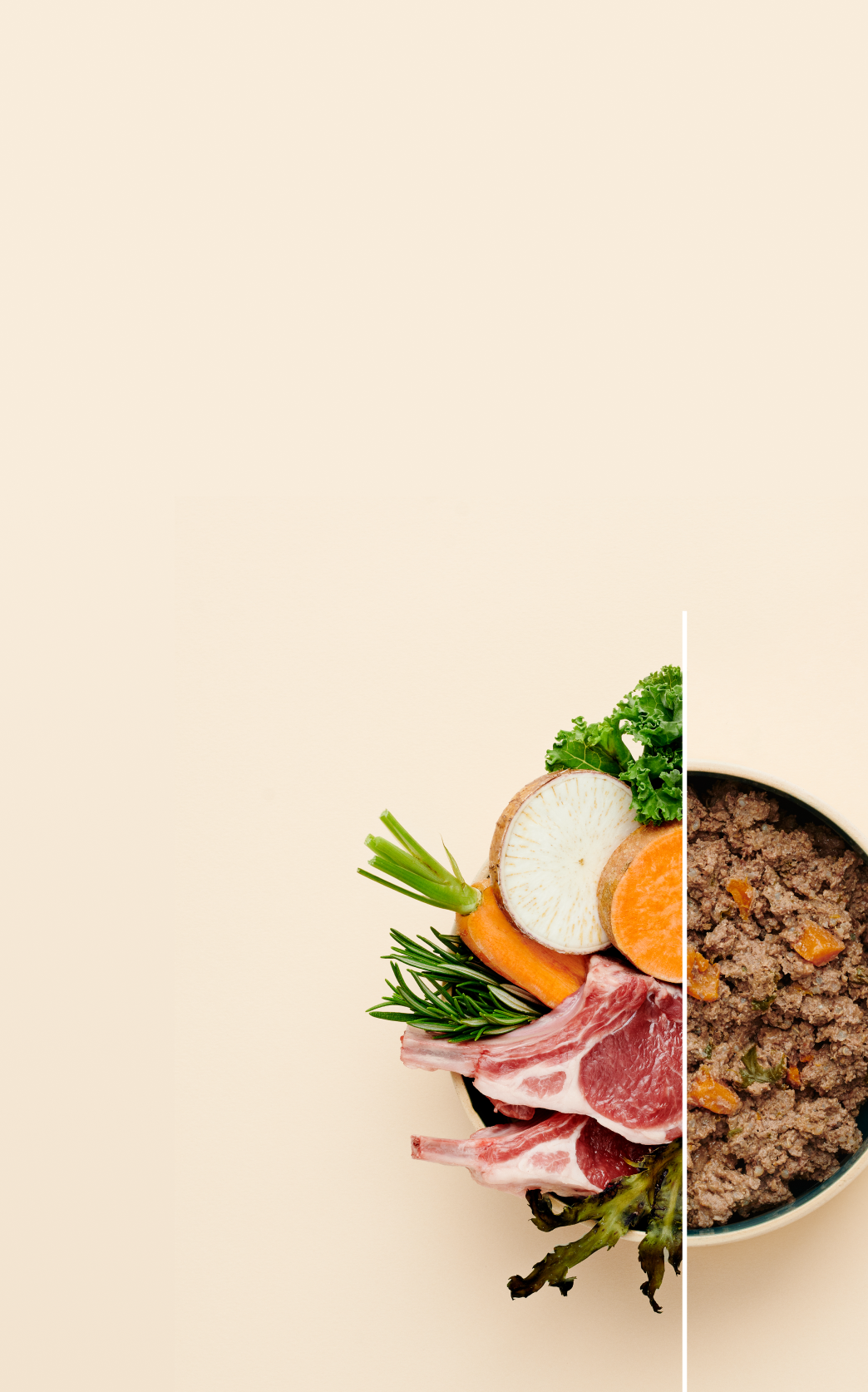
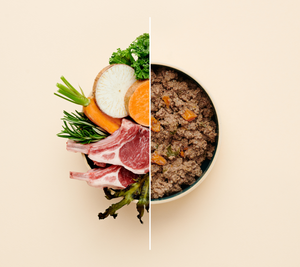
Marleybones Pantry Fresh meals are built around this principle. The recipes use freshly prepared meat and superfoods including quinoa, chia seeds, hemp seeds, chicory root, and linseeds, all sealed raw and slow-cooked in-pack without preservatives or freezing. Chicory root acts as a natural prebiotic, which actively supports the gut microbiome, useful for Labrador puppies whose digestion needs all the help it can get in the first few months. The meals are complete for all life stages, meaning the calcium and phosphorus ratios have been formulated to meet puppy requirements, not just adult maintenance.
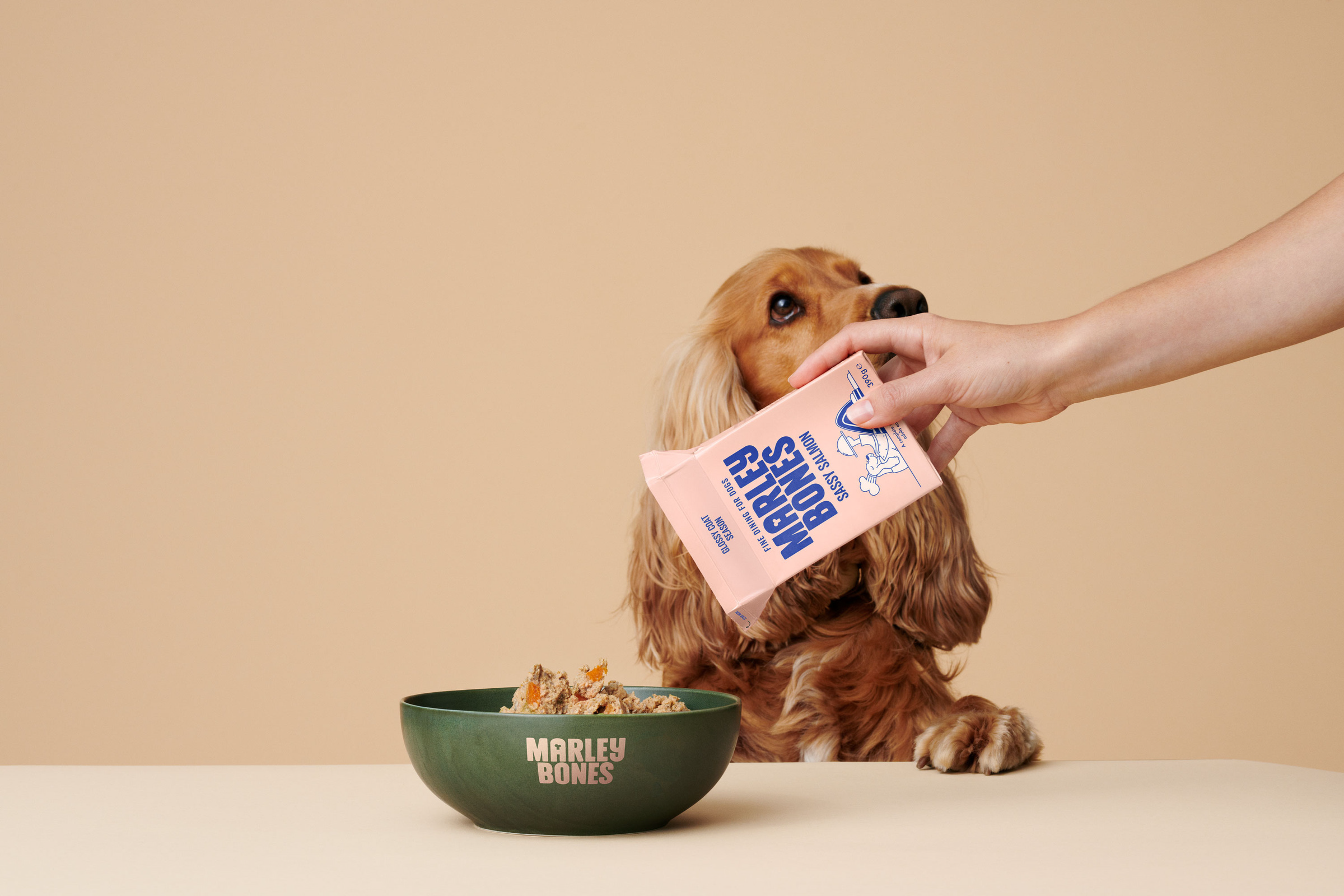
There are four meal options: Boss Beef, Chic Chicken, Lush Lamb, and Sassy Salmon. Rotating between these gives variety in protein sources and amino acid profiles, which supports whole-body development rather than relying on a single protein indefinitely.
How much should you feed a Labrador puppy, and how often?
Labrador puppies need feeding three to four times a day from weaning to around 16 weeks, then twice daily from four months onwards. Portion sizes depend entirely on current body weight, expected adult weight, and activity level, not on how hungry they appear to be. Labradors will always appear hungry.
A rough guide for a Labrador puppy expected to reach 30kg at adult weight:
- 8 to 12 weeks: approximately 4 to 5% of current body weight per day, split across four meals
- 3 to 6 months: approximately 3 to 4% of current body weight per day, split across three meals
- 6 to 12 months: approximately 2.5 to 3% of current body weight per day, split across two meals
These are starting points. You should be able to feel your puppy's ribs without pressing hard, and there should be a visible waist when viewed from above. If you cannot feel the ribs or the waist has disappeared, reduce the daily portion by 10% and reassess after two weeks. Marleybones provides feeding guidelines with its meals, and the calorie content per pack is clearly stated so you can calculate portions accurately rather than estimating by volume.
Consistency in calorie intake from puppyhood directly reduces the risk of the adult obesity that affects a significant proportion of UK Labradors. Getting this habit established early is one of the most useful things you can do as a Labrador owner.
When should you transition a Labrador puppy to adult food?
Labradors are considered fully grown at around 12 to 18 months. The transition from puppy to adult feeding does not need to happen at a fixed date but should track the point at which growth plates close and rapid skeletal development slows. Most Labrador owners make the switch between 12 and 15 months.
Because Marleybones meals are complete for all life stages, there is no abrupt formula change required when moving from puppy to adult feeding. The same meals continue, with portion sizes adjusted downward to reflect a slower metabolic rate and reduced growth demands. This makes the transition genuinely seamless rather than a gut-disrupting food switch at an already significant life stage.
If you are introducing Marleybones for the first time, transition over seven to ten days regardless of your puppy's age. Start with 25% new food alongside 75% previous food, and increase the proportion of Marleybones every two to three days. Labrador puppies can have sensitive digestion during dietary transitions, and a gradual switch reduces the risk of loose stools.

“A complete game changer!!”
FAQs
Is fresh food safe for Labrador puppies?
Yes, provided the recipe is nutritionally complete and formulated to meet puppy requirements. The key is checking that the food is FEDIAF or AAFCO compliant for growth, not just for adult maintenance. Marleybones Pantry Fresh meals are FEDIAF compliant and complete for all life stages including puppies, so they meet the established European standard for puppy nutrition.
Can Labrador puppies eat the same food as adult dogs?
Only if the food is labelled complete for all life stages. Foods formulated for adult maintenance alone do not meet the higher protein, calcium, and phosphorus requirements of a growing puppy. Always check the nutritional adequacy statement on the pack before feeding any food to a puppy.
How do I know if my Labrador puppy's food is causing digestive problems?
Loose stools for more than three days, excessive flatulence, vomiting after meals, or visible mucus in the stool are all signs that the current food is not agreeing with your puppy. A dietary switch, carried out gradually over seven to ten days, resolves most cases. If symptoms are persistent, severe, or worsening, consult your vet to rule out infection, parasites, or an underlying condition before changing food.
What protein is best for a Labrador puppy?
High-quality animal protein from a named meat source is the priority. Chicken, beef, lamb, and salmon all provide strong amino acid profiles that support muscle development and immune function. Salmon adds the benefit of omega-3 fatty acids (EPA and DHA), which support brain development and joint health, both relevant for a large breed like the Labrador. Rotating between protein sources across the week gives broader nutritional coverage.
How many times a day should I feed my Labrador puppy?
Three to four times a day from weaning to 16 weeks, then twice daily from four months. The total daily calorie intake matters more than the number of meals, but spreading it across multiple sittings reduces bloat risk and keeps blood sugar stable. Labrador puppies eat fast and benefit from having their total ration divided rather than served in one go.
Where can I buy Marleybones for my Labrador puppy?
Marleybones Pantry Fresh meals are available via subscription at marleybones.com, and from Waitrose, Ocado, Whole Foods Market, Pets at Home online, and the Co-op. The subscription option lets you set a delivery frequency that matches your puppy's feeding schedule, which is useful during the high-consumption growth phase when you go through food quickly.

Gloss up your pup’s life with an omega-3 booster
 Give your dog the quality nutrition they deserve
Real meat, wholesome veggies and functional superfoods.
Get 40% OFF today