



Best Dog Food for a French Bulldog Puppy

At a glance
- French Bulldog puppies are prone to sensitive digestion, flatulence, and food allergies — diet quality directly affects all three.
- Fresh food diets offer higher digestibility than dry kibble, meaning more nutrients absorbed and less gas produced.
- Puppies require food that is complete for all life stages and meets FEDIAF nutritional guidelines — not all dog foods qualify.
- Marleybones Pantry Fresh meals are FEDIAF compliant, vet-developed, and complete for puppies without refrigeration or freezing.
What makes French Bulldogs different when it comes to food?
French Bulldogs are brachycephalic, meaning their shortened skull structure affects more than just breathing. Their digestive anatomy is equally compact, and the breed is statistically one of the most allergy-prone in the UK. Common triggers include wheat, corn, soy, and low-quality protein sources — all of which appear regularly in standard dry kibble.
Frenchie puppies grow fast in their first six months, then slow down considerably. During that early window, protein quality and calcium-to-phosphorus ratios matter enormously for healthy muscle and bone development. Get those wrong and you risk skeletal problems that show up later in life.
Flatulence is the breed's most discussed quirk, but it is not inevitable. It is largely a symptom of poor digestibility. When food is not properly broken down in the small intestine, it ferments in the large intestine — producing gas. Higher-digestibility diets, particularly fresh food, reduce this significantly. French Bulldogs also have a tendency toward weight gain, so calorie density and portion control matter from the very start.
What nutrients does a French Bulldog puppy actually need?
Frenchie puppies need protein at the top of the ingredient list — real, named meat, not derivatives or meat meal. Protein supports muscle development and immune function during the first year. A diet delivering at least 22% crude protein on a dry matter basis meets FEDIAF minimums for growing puppies, though higher is better when the source is digestible.
Omega-3 fatty acids, particularly DHA, are critical for brain and eye development in the first 12 weeks and remain important throughout puppyhood. Look for oily fish, linseeds, or chia seeds as sources. Marleybones meals include both Sassy Salmon and superfoods such as chia seeds and linseeds, which provide plant-based omega-3 alongside animal-sourced DHA from fish.
Calcium and phosphorus must be present in the correct ratio — roughly 1.2:1 to 1.4:1 — to support bone growth without overloading developing joints. This is where homemade raw diets without supplementation often fall short. A vet-developed complete food removes the guesswork entirely.
Prebiotic fibre supports the gut microbiome and reduces fermentation in the large intestine. Marleybones includes chicory root, a well-researched prebiotic, across its recipes. For a breed as prone to digestive upset as the French Bulldog, this is not a bonus ingredient — it is a functional one.
Which is the best dog food for a French Bulldog puppy?
Fresh food is the strongest format for French Bulldog puppies, and the evidence is not particularly close. Digestibility studies consistently show fresh and lightly cooked diets outperform heavily processed kibble. For a breed with a sensitive gut and a predisposition to allergies, that gap is meaningful.
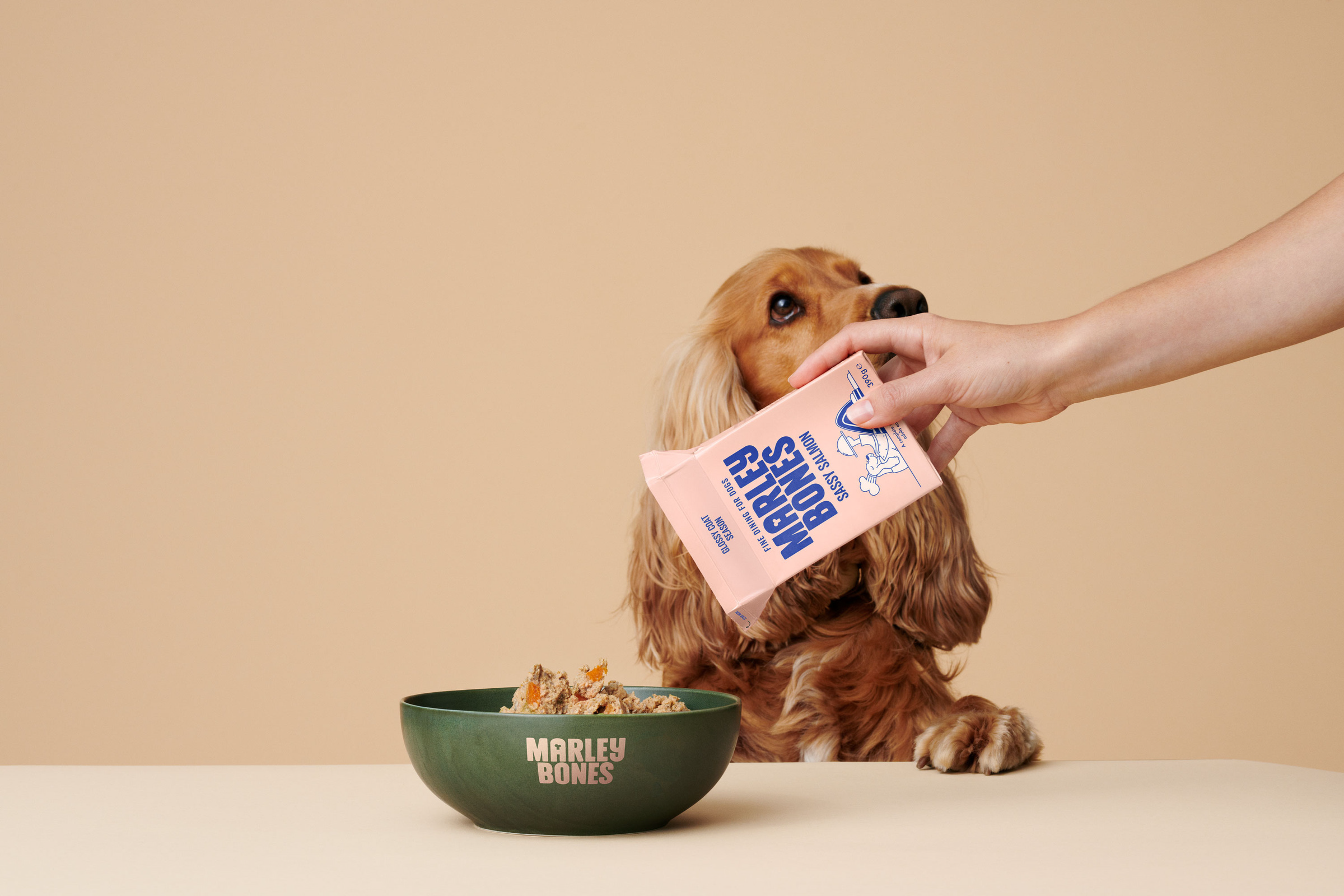
Within the fresh category, the practical question is whether the food is complete, vet-developed, and genuinely convenient enough to feed consistently. Marleybones Pantry Fresh meals tick all three. Recipes are sealed raw and slow-cooked in-pack, which preserves nutrient integrity without requiring refrigeration before opening. There is no freezer needed, no thawing, and no preservatives — the format sits between frozen raw and cold pressed in terms of convenience, while matching frozen raw on digestibility.
The four recipes — Boss Beef, Chic Chicken, Lush Lamb, and Sassy Salmon — provide genuine protein variety. Rotating proteins reduces the likelihood of developing a food sensitivity to any single protein source, which is a relevant concern for a breed with known allergy risk. All four are complete for all life stages, including puppies, and FEDIAF compliant. Marleybones has delivered over 2,000,000 meals and holds a 4.8 out of 5 rating on Trustpilot, with 9 in 10 fussy dogs reported to enjoy the food.
For owners who want frozen raw, that remains an excellent choice provided the diet is nutritionally balanced and hygiene protocols are followed. Cold pressed is a solid second if fresh is not accessible. Standard dry kibble is the least suited format for the breed, particularly in puppyhood.
How do I transition my French Bulldog puppy onto a new food?
French Bulldog puppies have sensitive stomachs, so an abrupt food change regularly causes loose stools, vomiting, or increased gas. Transition over 7 to 10 days minimum.
Start with 25% new food and 75% existing food for the first three days. Move to 50/50 for the next three days, then 75% new food for two days, then full transition. If your puppy shows any digestive upset at any stage, stay at that ratio for an additional two to three days before moving forward.
If your Frenchie puppy has pre-existing digestive issues, food allergies, or skin conditions linked to diet, speak to your vet before switching foods. Persistent symptoms — recurring loose stools, chronic skin irritation, or ongoing vomiting — warrant a vet assessment regardless of which food you choose.
Marleybones meals include a transition guide and are available on subscription from marleybones.com, which makes maintaining a consistent feeding routine straightforward. The shelf-stable format means you can keep meals in a cupboard rather than managing freezer space during a period when your puppy's feeding volume is increasing rapidly.

“A complete game changer!!”
FAQs
Can French Bulldog puppies eat fresh food, or do they need puppy-specific kibble?
French Bulldog puppies can eat fresh food from weaning, provided the food is complete for all life stages and meets FEDIAF nutritional guidelines. There is no requirement to feed kibble. A complete fresh food that meets puppy nutrient requirements is nutritionally equivalent to or superior to puppy-labelled dry food, and typically offers better digestibility for a sensitive-stomached breed.
How much should I feed my French Bulldog puppy?
Feeding amounts depend on your puppy's current weight and expected adult weight. A French Bulldog's adult weight typically falls between 8 and 14 kilograms. Most fresh food brands provide a feeding calculator. As a general guide, puppies up to four months old need approximately 8 to 10% of their body weight in food per day, dropping to around 6 to 8% from four to six months, and 3 to 4% from six months onward. Adjust based on body condition — you should be able to feel ribs without pressing, but not see them.
Are French Bulldogs prone to food allergies, and what ingredients should I avoid?
French Bulldogs are among the most allergy-prone breeds in the UK. Common dietary triggers include wheat, corn, soy, artificial additives, and low-quality protein derivatives. Single-protein fresh food diets with no fillers are the easiest way to identify and avoid triggers. If your puppy shows recurring skin irritation, ear infections, or digestive upset, a dietary elimination trial under vet guidance identifies the culprit more reliably than guessing.
Is Marleybones suitable for French Bulldog puppies specifically?
Marleybones Pantry Fresh meals are complete for all life stages, including puppies, and are FEDIAF compliant. The vet-developed recipes contain no fillers, no preservatives, and include functional superfoods such as chicory root for prebiotic gut support and linseeds and chia seeds for omega-3. The four protein options — Boss Beef, Chic Chicken, Lush Lamb, and Sassy Salmon — allow rotation, which reduces the risk of developing a single-protein sensitivity over time. The shelf-stable format requires no freezer, which is practical for the increasing food volumes a growing Frenchie puppy demands.
When should a French Bulldog puppy move to adult food?
French Bulldogs are a small to medium breed and typically reach adult size between 10 and 12 months. If you are feeding a food that is complete for all life stages, no transition is necessary — the same food works throughout. If you are feeding a puppy-specific formula, switch to an adult recipe at 12 months. Avoid switching too early, as puppy nutrient requirements — particularly for protein and DHA — are higher than adult maintenance levels.
Does fresh food reduce flatulence in French Bulldogs?
Yes, for most dogs. Flatulence in French Bulldogs is largely a digestibility problem. When food is not fully digested in the small intestine, it ferments in the large intestine and produces gas. Fresh and lightly cooked foods are more digestible than heavily processed kibble, meaning less undigested material reaches the colon. Dog owners switching from kibble to fresh food consistently report reduced gas within two to four weeks of transition.

Gloss up your pup’s life with an omega-3 booster
 Give your dog the quality nutrition they deserve
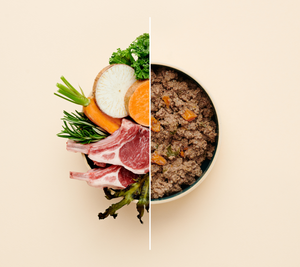
Real meat, wholesome veggies and functional superfoods.
Get 40% OFF today