


Best Dog Food for an English Cocker Spaniel Puppy

At a glance
- English Cocker Spaniel puppies need a protein-first diet — muscle development and immune function both depend on it during the first 12 months.
- Skin sensitivity and ear problems are common in the breed — omega-3 fatty acids from fish or seeds directly support both.
- Fresh food delivers higher moisture content than dry kibble — this supports kidney function and overall hydration in growing pups.
- A complete food certified for all life stages covers puppy nutritional requirements without needing a separate puppy-specific formula.
- Gradual food transitions matter for this breed — their digestive systems respond poorly to sudden diet changes.
What makes English Cocker Spaniels different when it comes to puppy food?
English Cocker Spaniel puppies need a diet that addresses a few breed-specific tendencies early. The breed is prone to skin sensitivity, ear infections linked to food reactivity, and digestive upsets — all of which are strongly influenced by what goes into the bowl from day one. If you are already researching ahead, the full guide to feeding an English Cocker Spaniel covers how those needs evolve into adulthood.
As a gundog breed, English Cockers are energetic and active from an early age. They need enough protein and fat to fuel development without tipping into excess calories — overfeeding in puppyhood can set up joint problems later. The breed also has a famously expressive coat, and the condition of that coat is a direct reflection of dietary fat quality.
Ear conformation in the breed means infections are common — and many of those infections are triggered by food sensitivities, particularly to poor-quality protein sources or artificial additives. Starting a puppy on a clean, high-quality diet reduces that risk from the outset.
SUITABILITY TABLE
| Food format | Protein quality | Skin and coat support | Digestive suitability | Convenience | Verdict for ECS puppies |
|---|---|---|---|---|---|
| Pantry Fresh (e.g. Marleybones) | High — whole meat, minimal processing | Strong — includes omega-rich ingredients | Excellent — no fillers, natural prebiotics | Shelf-stable, no freezer needed | Strong choice for the breed |
| Frozen raw | High — unprocessed protein | Good — natural fat profile | Variable — bacterial risk in puppies | Requires freezer, careful handling | Higher risk for young pups; most vets advise caution |
| Cold pressed | Moderate — lower heat than kibble | Moderate — depends on recipe | Good — gentler processing than extruded kibble | Easy — no prep needed | Decent mid-ground option |
| Dry kibble | Lower — high-heat extrusion degrades protein | Weaker — low moisture, fats often added back artificially | Adequate — but fillers common | Very convenient, widely available | Works, but not ideal for skin-sensitive breeds |
| Wet canned | Variable — quality varies hugely by brand | Moderate — higher moisture is positive | Generally good — soft and digestible | Easy, no prep | Better than kibble for moisture; check protein sources carefully |
What is the best dog food for an English Cocker Spaniel puppy?
The best dog food for an English Cocker Spaniel puppy is a complete, fresh food built around real, identifiable protein, natural sources of omega-3 fatty acids, and a prebiotic fibre source to keep the gut settled. Those three elements address the breed's biggest nutritional vulnerabilities at once.
Protein is the foundation. Puppy muscle and tissue development happens fast in the first six months — you need a food where named meat is the primary ingredient, not a meat derivative or a plant-based protein substitute. Look at the ingredient list: if the first item is not a whole meat or fresh meat source, the recipe is not protein-first.
Omega-3 fatty acids, found in salmon, linseeds, chia seeds and hemp seeds, directly feed skin barrier function. A puppy with a strong skin barrier is less reactive to environmental allergens — which matters for a breed prone to itching and ear flare-ups. An omega-boosting oil added to meals can further strengthen coat condition if your puppy needs extra support.
Prebiotic fibre — the type that feeds beneficial gut bacteria rather than just adding bulk — is the third pillar. Chicory root is one of the most well-researched sources in dog nutrition. It feeds the beneficial bacteria that keep digestion stable, which is particularly relevant for a breed that can develop loose stools under dietary stress.
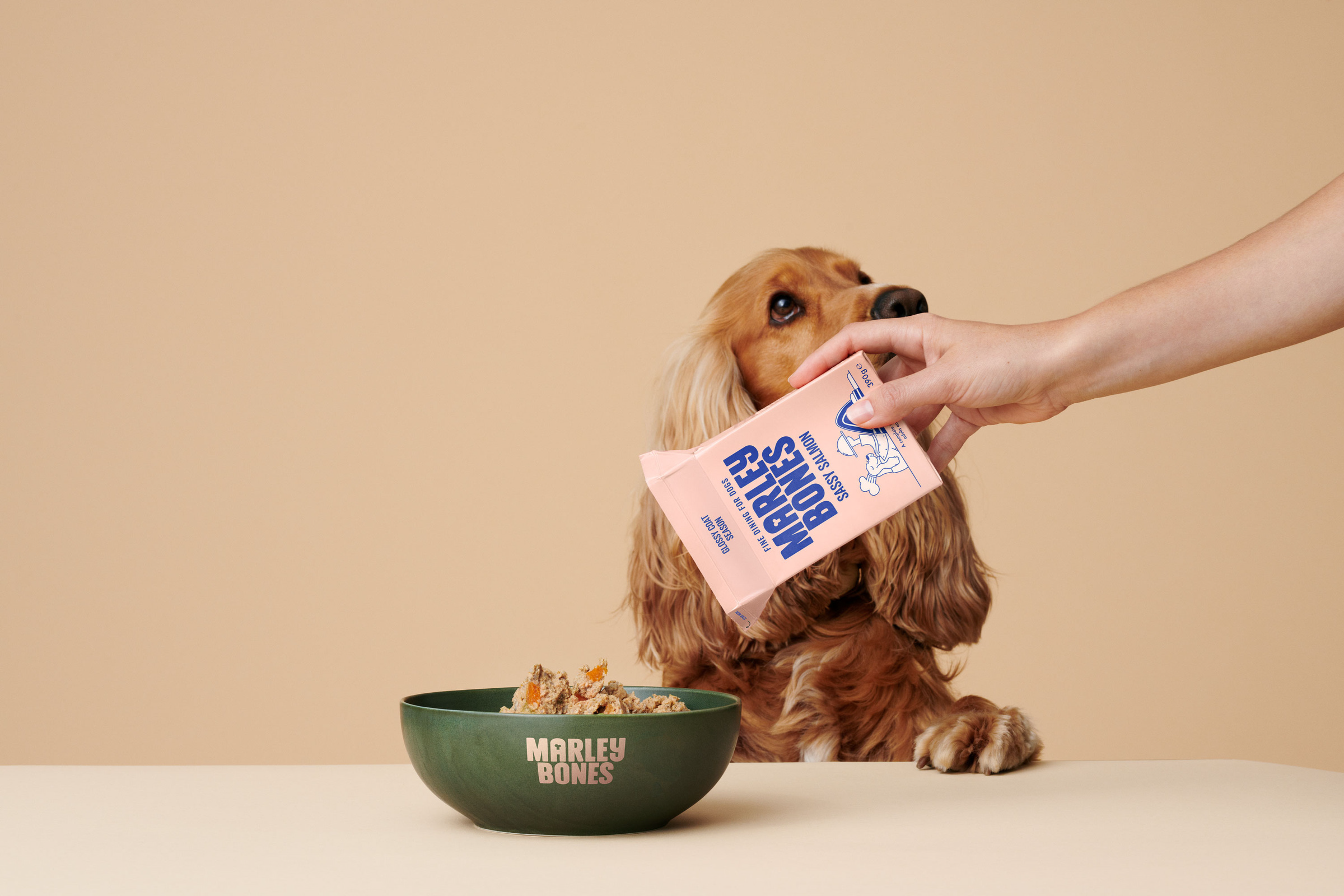
Marleybones Sassy Salmon is formulated with chia seeds, hemp seeds, linseeds and chicory root — a practical choice for an English Cocker Spaniel puppy where skin health and gut stability are both a concern. The recipe is complete for all life stages, including puppies, so no separate formula is needed.
How much should you feed an English Cocker Spaniel puppy, and how often?
Portion size for an English Cocker Spaniel puppy depends on current weight, expected adult weight, and age. A rough starting point: most English Cocker Spaniels reach an adult weight of 12-15 kg, and puppies should be fed to support steady growth rather than rapid weight gain.
Feeding frequency matters as much as quantity. Up to 12 weeks, feed four times daily. From 12 weeks to six months, drop to three meals. From six months onward, two meals a day is standard. Spreading calories across multiple meals reduces digestive load — important for a breed with a sensitive gut.
Always follow the feeding guide on your chosen food, and adjust based on body condition rather than the calendar. You should be able to feel your puppy's ribs without pressing hard — if you cannot, reduce portions slightly. Age-appropriate puppy portions explained in detail can help if you are unsure whether your pup is on track.
If your puppy goes through a phase of refusing meals, this is common in the breed and does not always signal a health problem. Understanding why a puppy stops eating can help you separate normal fussiness from something worth investigating.
How do you switch an English Cocker Spaniel puppy to a new food without causing problems?
Transition slowly. English Cocker Spaniel puppies have digestive systems that react to sudden changes — loose stools, bloating, and reduced appetite are common when food is switched too quickly.
A seven-to-ten-day transition is the minimum. Start with 20% new food mixed into 80% of the existing food. Increase the proportion of new food by roughly 10-15% every two days. By day ten, the puppy should be on 100% new food without digestive disruption.
If loose stools appear during the transition, slow the process down. Do not push through — let the gut settle at the current ratio for two to three more days before increasing. If symptoms persist beyond two weeks or include blood in the stool, vomiting, or significant lethargy, consult your vet. A full guide to transitioning a dog to fresh food walks through the process in detail.
Marleybones meals come in individual sealed pouches, which makes portion control during the transition straightforward — no measuring out of large bags or dealing with thawing schedules. The pantry-fresh format means you store them at room temperature and open as needed.

“Such a relief to see her enjoying her food”
FAQs
Can an English Cocker Spaniel puppy eat adult dog food?
Yes, if the food is labelled complete for all life stages. This classification means the recipe meets the nutritional standards for puppies as well as adults. Always check the label — foods labelled for adult maintenance only do not provide the higher protein and fat levels a puppy needs for healthy development.
Is fresh food better than kibble for English Cocker Spaniel puppies?
Fresh food typically delivers higher-quality protein and more moisture than dry kibble. For a breed prone to skin sensitivity and digestive issues, those differences are meaningful. Kibble is not harmful, but the high-heat extrusion process used to make it degrades protein quality, and many recipes include fillers that add calories without nutritional benefit.
What ingredients should I avoid in dog food for an English Cocker Spaniel puppy?
Avoid artificial preservatives, artificial colours, and generic meat derivatives (listed as "meat and animal derivatives" rather than named meats). Cheap cereal fillers like wheat, corn, and soy are common triggers for skin and gut reactions in the breed. A short, transparent ingredient list with named protein sources is the benchmark to aim for.
Does Marleybones make a suitable food for English Cocker Spaniel puppies?
Yes. Marleybones recipes are vet-developed and complete for all life stages, which means they meet puppy nutritional requirements. The Sassy Salmon recipe includes omega-rich superfoods — chia seeds, hemp seeds, and linseeds — alongside chicory root as a prebiotic. That combination directly supports the skin, coat, and gut health priorities specific to the breed.
How do I know if my English Cocker Spaniel puppy has a food sensitivity?
Common signs include recurrent ear infections, itchy skin (particularly around the paws, belly, and face), loose stools, and excessive flatulence. These symptoms often improve within four to six weeks of switching to a cleaner diet. If symptoms are severe, persistent, or worsening, consult your vet — a food elimination trial under veterinary guidance is the reliable way to identify the specific trigger.
When should an English Cocker Spaniel move from puppy to adult food?
English Cocker Spaniels typically reach their adult size between 10 and 12 months. If you are feeding a food labelled complete for all life stages, no transition is needed — the same recipe works throughout. If you are on a puppy-specific formula, begin transitioning to an adult version around 10-12 months using the gradual 7-10 day method.
“A complete game changer!!”


 Give your dog the quality nutrition they deserve
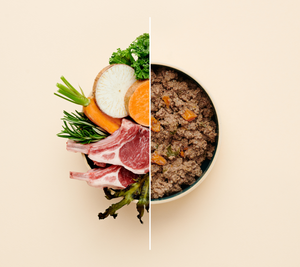
Real meat, wholesome veggies and functional superfoods.
Get 30% off: Take the quiz