

 Vet reviewed
Fresh Dog Food vs Kibble - Which is Better for Your Dog?

At A Glance
- Kibble is produced through high-heat extrusion at 120–160°C, which degrades heat-sensitive nutrients and reduces digestibility compared to gently cooked fresh food
- Fresh dog food contains 65–80% moisture; kibble contains around 10% — a significant difference for dogs prone to urinary issues
- Digestibility scores for fresh dog food are consistently higher than for kibble: dogs absorb a greater proportion of nutrients from minimally processed meals
- Kibble tends to rely on preservatives to achieve its shelf life; Pantry Fresh® meals are shelf-stable for up to 18 months with no preservatives, using an in-pack steam cooking method
- Many kibble contains fillers, low quality by-products, and questionable additives; Marleybones Pantry Fresh® uses 60%+ real meat with visible whole ingredients
|
|
Fresh dog food (Marleybones Pantry Fresh®) |
Common kibble |
|
Format |
Moist, complete fresh meal |
Dry extruded pellet |
|
Moisture content |
65–80%, supports hydration and digestion |
~10%, dogs must compensate by drinking more |
|
Cooking temperature |
~89°C, gentle in-pack steam cooking |
120–160°C extrusion, degrades heat-sensitive nutrients |
|
Main ingredients |
60%+ real meat, whole vegetables, functional ingredients: chicory root, chia seeds, hemp seeds |
Blended meat meals, grains, by-products; quality varies widely by brand |
|
Preservatives |
None |
Typically required for shelf stability |
|
Storage |
Room temperature, up to 18 months unopened |
Room temperature, typically 12–18 months |
|
Texture |
Soft, well suited to puppies, seniors, and dogs with dental issues |
Hard pellet, can be difficult for seniors and dental-sensitive dogs |
|
Digestibility |
High: whole ingredients, gentle cooking, natural prebiotics |
Lower, with consequent higher fecal output |
|
Palatability |
High: natural aroma of meat cooked in its own juices; loved by 9 in 10 fussy dogs |
Variable: many dogs tolerate rather than enjoy kibble |
|
Life stage coverage |
Complete for all life stages including puppies |
Varies; check nutritional adequacy statement per product |
What is dry dog food and how is it made?
Dry dog food, commonly known as kibble, is produced through a process called extrusion. Ingredients (typically a blend of meat meals, grains, plant and animal by-products, and additives) are mixed into a dough, cooked under high heat and pressure (120–160°C), and forced through a die to create the uniform pellets familiar from many dog food bags. The high temperatures involved achieve sterility and a long shelf life, but they also degrade heat-sensitive vitamins, denature proteins, and reduce the digestibility of amino acids. Preservatives are typically added to maintain stability once the bag is opened.
Kibble became the dominant dog food format in the 20th century largely because of convenience and cost, not because of nutritional superiority. Many owners are now moving away from it precisely because better-understood nutrition has changed what "good dog food" means.
How does fresh dog food differ from kibble nutritionally?
Fresh dog food uses whole, recognisable ingredients cooked at lower temperatures, which preserves a greater proportion of macro and micro nutrients in a form dogs can actually absorb. Digestibility scores for fresh food are consistently higher than for kibble, meaning dogs get more nutritional value from the same amount of ingested nutrients.
Moisture content is the other significant difference. Fresh dog food contains 65–80% moisture, compared to roughly 10% in kibble. In their evolutionary history, dogs took most of their hydration from food. Dry feeding — whether kibble or any other dry dog food format — places a much greater burden on dogs to drink enough water to compensate, and research shows that dogs on dry diets consistently consume less total water than dogs on fresh or wet diets even when water is freely available. For dogs with urinary or kidney issues this matters clinically, not just theoretically.
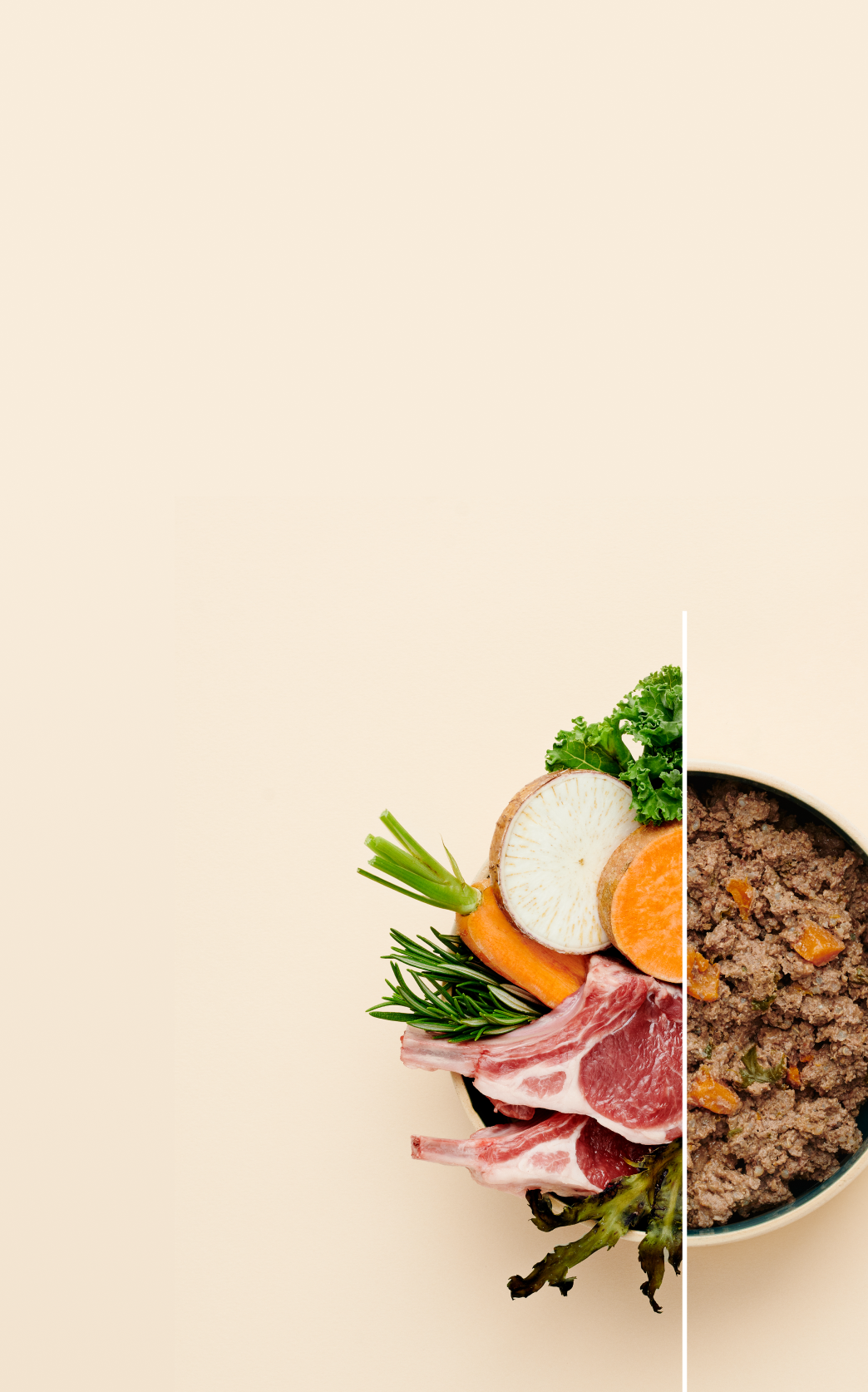
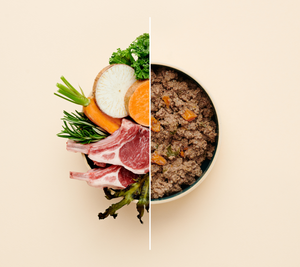
Marleybones Pantry Fresh® meals are built on 60%+ real meat, with whole vegetables and a range of functional ingredients including chicory root, chia seeds, quinoa, and hemp seeds. Chicory root acts as a natural prebiotic, feeding beneficial gut bacteria and supporting stool consistency.

Freshly prepared British lamb, veggies & superfoods
Is fresh dog food better for dogs with sensitive stomachs than kibble?
For many dogs with sensitive stomachs, fresh food is a meaningful improvement over kibble. The higher digestibility means less undigested material passing through the gut, which reduces the fermentation and loose stools that often follow a kibble-heavy diet. The natural prebiotics in Marleybones recipes, chicory root rich in inulin, actively support gut bacteria balance rather than just removing irritants. In the Marleybones customer survey of 1,056 subscribers, 71% reported better digestion and stool quality after switching.
The caveat worth noting: a transition from kibble to fresh food should be gradual, over 7–10 days, to give the gut microbiome time to adjust. An abrupt switch can cause temporary digestive upset regardless of how good the new food is.
Does fresh dog food cost more than dry dog food?
Good-quality fresh dog food costs more per meal than budget kibble, but the gap narrows considerably when comparing against premium kibble brands.
The relevant comparison is not fresh versus budget kibble, but fresh versus what owners are already spending on premium dry dog food, vet supplements to compensate for not ideal diet, and the costs associated with persistent digestive or coat issues.

“A complete game changer!!”
Is Pantry Fresh® as convenient as kibble?
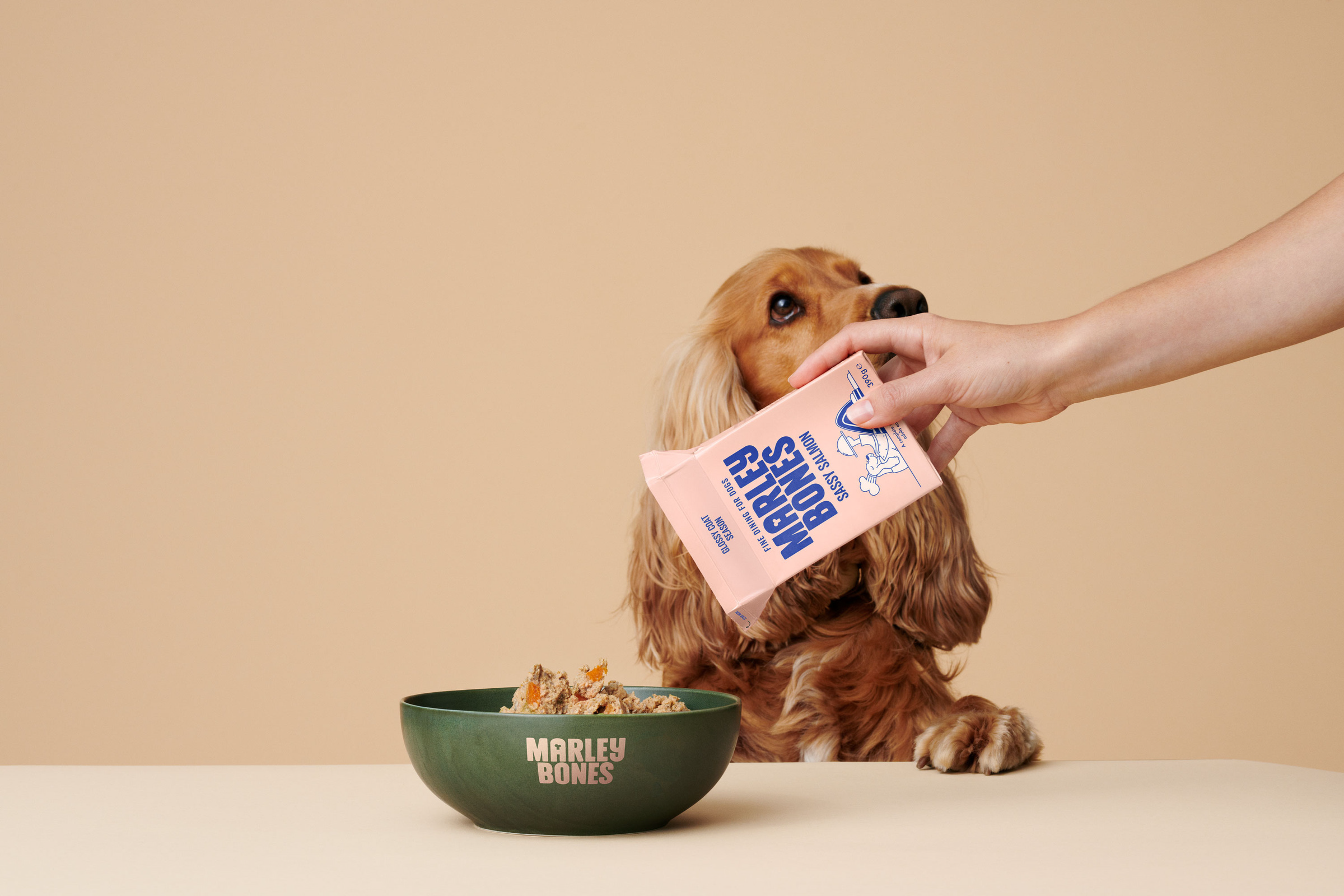
For most households, yes. The main practical advantage kibble has historically held over fresh food is shelf stability and ease of storage: no freezer required, no defrosting, no meal prep. Pantry Fresh® removes that distinction entirely. Meals are shelf-stable at room temperature for up to two years unopened, ready to serve straight from the cupboard. Once opened, refrigerate and use within 2–3 days.
The format also works for travel and holidays in a way that frozen fresh food does not. No defrosting, no reliance on hotel fridges. The cupboard format is genuinely portable.
Which dogs benefit most from switching from dry dog food to fresh?
Fresh food tends to make the most noticeable difference for dogs with sensitive stomachs, fussy eaters, senior dogs, and dogs with health issues where hydration from food is particularly relevant. That said, the higher digestibility and ingredient quality apply to all dogs, and healthy adults on kibble are still eating a more processed diet with lower moisture than they would on fresh food.
Dogs with dental issues also benefit from the soft texture of fresh food, which removes the need to crunch through hard pellets that some dogs find uncomfortable or refuse entirely.
Every dog is different — build your personalised Marleybones feeding and health plan tailored to your dog's age, size, and health requirements.

Treats with fresh British beef as the #1 ingredient
FAQs
Is fresh dog food healthier than dry dog food?
Yes, for most dogs. Fresh dog food uses whole, minimally processed ingredients cooked at lower temperatures, resulting in higher digestibility and greater nutrient bioavailability than dry dog food. The significantly higher moisture content also supports hydration and digestive health in ways that dry feeding cannot replicate.
Can I mix fresh dog food with dry dog food?
Yes, and many owners do this as a step toward full fresh feeding or for budget reasons. When mixing, calculate total daily calorie intake across both foods rather than following the full serving guidelines for each independently — overfeeding is the most common mistake. Marleybones offers half plans specifically designed for owners who want to mix with dry dog food.
How do I switch my dog from dry dog food to fresh?
Transition gradually over 7–10 days. Start by replacing 25% of the dry food portion with fresh food on days 1–3, increasing to 50%, then 75%, then 100% by day 8–10. Monitor stool consistency and appetite throughout. Dogs with particularly sensitive digestion may benefit from a slower two-week transition.
Is fresh dog food suitable for puppies?
Yes, provided the recipe is nutritionally complete for all life stages. Marleybones Pantry Fresh® meets FEDIAF nutritional standards for puppies, adults, and seniors. The soft texture is also well suited to puppies whose jaws and teeth are still developing.
Does Marleybones Pantry Fresh® need refrigerating?
Not before opening. Pantry Fresh® meals are shelf-stable at room temperature and store in the cupboard for up to two years unopened. Once opened, refrigerate and use within 2–3 days.
Is fresh dog food worth the extra cost compared to dry dog food?
For many dogs, yes — particularly those with sensitive stomachs, fussy eating habits, or owners currently spending on premium dry dog food. Marleybones Pantry Fresh® starts from £1.96 per day for a 5kg dog.
“Such a relief to see her enjoying her food”
Reviewed by Dr Davide Stefanutti DVM, PhD, Veterinarian Nutritionist
References
- Tanprasertsuk, J., Perry, L. M., Tate, D. E., Honaker, R. W., & Shmalberg, J. (2021). Apparent total tract nutrient digestibility and metabolizable energy estimation in commercial fresh and extruded dry kibble dog foods. Translational Animal Science, 5(3), txab071.
- Algya, K. M., Cross, T. W. L., Leuck, K. N., Kastner, M. E., Baba, T., Lye, L., & Swanson, K. S. (2018). Apparent total-tract macronutrient digestibility, serum chemistry, urinalysis, and fecal characteristics, metabolites and microbiota of adult dogs fed extruded, mildly cooked, and raw diets. Journal of Animal Science, 96(9), 3670–3683.
- Van Rooijen, C., Bosch, G., van der Poel, A. F., Wierenga, P. A., Alexander, L., & Hendriks, W. H. (2013). The Maillard reaction and pet food processing: effects on nutritive value and pet health. Nutrition Research Reviews, 26(2), 130–148.
- Sires, R., Yamka, R., & Wakshlag, J. (2025). Feeding fresh food and providing water ad libitum is clinically proven to exceed calculated daily water requirements and impact urine relative supersaturation in dogs. Frontiers in Veterinary Science, 12, 1675990.
- Stevenson, A. E., Hynds, W. K., & Markwell, P. J. (2003). Effect of dietary moisture and sodium content on urine composition and calcium oxalate relative supersaturation in healthy miniature schnauzers and labrador retrievers. Research in Veterinary Science, 74(2), 145–151.
 Give your dog the quality nutrition they deserve
Real meat, wholesome veggies and functional superfoods.
Get 40% OFF today